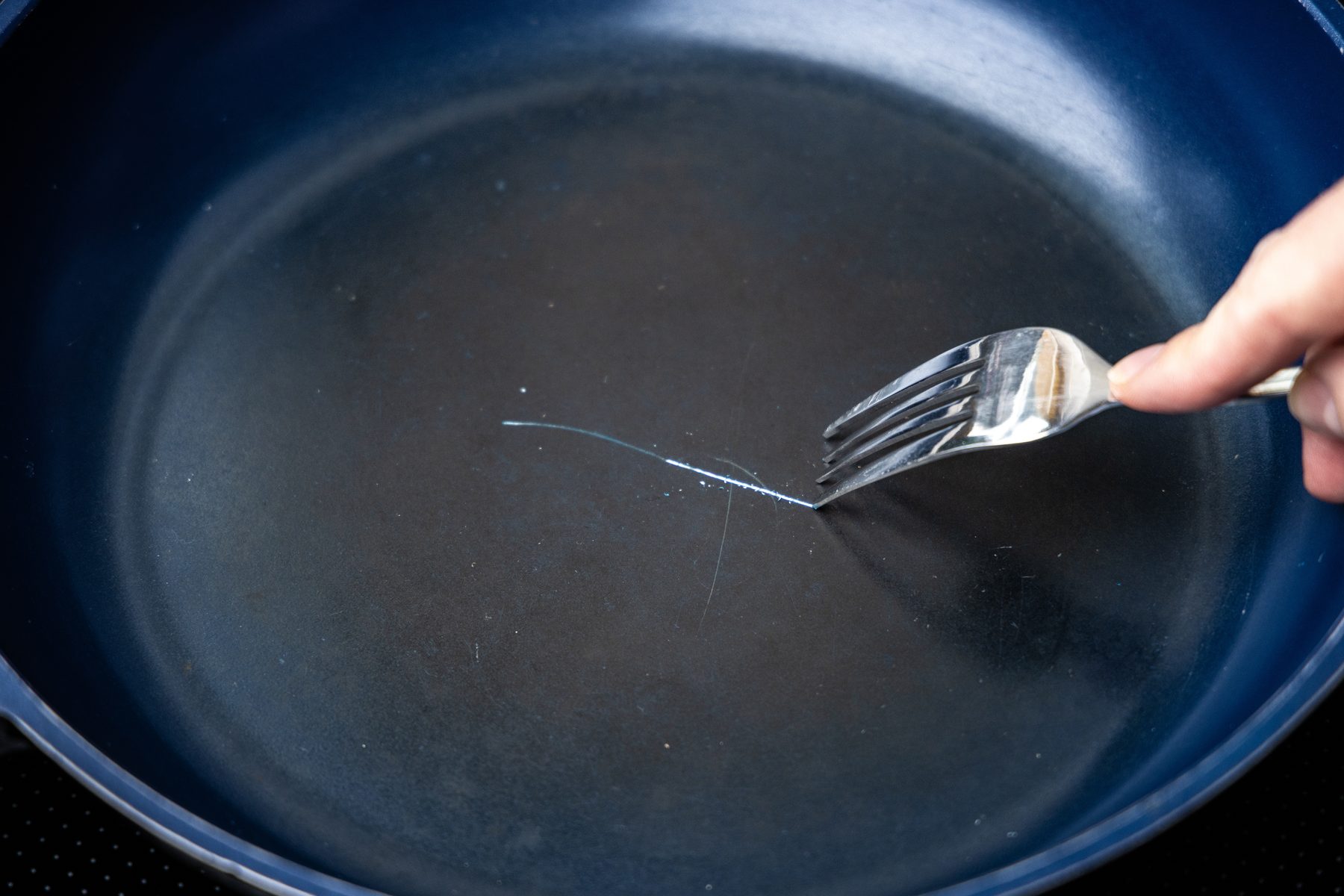
Most reporting on Teflon falls into one of two camps: it's a slow poison killing your family, or it's perfectly safe and the panic is overblown. Neither framing matches the evidence. The honest answer requires distinguishing between exposure routes — drinking water (real harm at population scale), occupational manufacturing (real harm at high doses), overheated cookware (real acute risk, especially to pet birds), and intact cookware at normal temperatures (limited evidence of harm).
The C8 Science Panel finding
After seven years of studying ~69,000 Mid-Ohio Valley residents exposed to DuPont's Washington Works PFOA discharges, the court-ordered C8 Science Panel in 2012 concluded probable links between PFOA exposure and six conditions: kidney cancer, testicular cancer, thyroid disease, ulcerative colitis, pregnancy-induced hypertension/preeclampsia, and hypercholesterolemia. The follow-up cohort study by Barry et al. (2013, PMID: 24149519) showed monotonic exposure-response trends across PFOA quartiles for kidney and testicular cancer.
This evidence is about water-route exposure. It is not directly about Teflon pans. It is, however, the load-bearing science behind every PFAS regulation that followed.
Vaccine response and immune effects
Grandjean et al. (2012, PMID: 22274686) studied a Faroe Islands birth cohort and found that children with higher prenatal and childhood PFAS serum had reduced antibody titers to tetanus and diphtheria boosters at age 7. A doubling in PFOS was associated with a 2.4-fold lower odds of reaching protective antibody levels. Grandjean et al. (2017) extended the finding to age 5 in a second cohort.
The ATSDR Toxicological Profile for Perfluoroalkyls (2021, clinician update 2024) lists six health endpoints plus decreased vaccine response, small decreases in birthweight, and elevated liver enzymes (ALT).
Polymer fume fever and pet birds
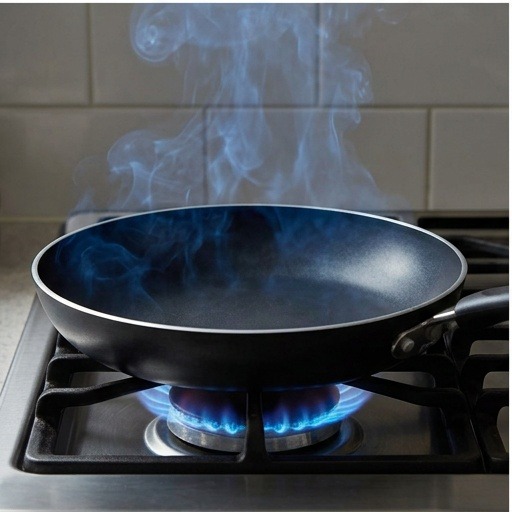
This is where intact cookware becomes a real and acute hazard.
PTFE pyrolysis above ~300–450 °C (572–842 °F) releases perfluoroisobutylene, hexafluoropropylene, and other fluorocarbon decomposition products. Onset of symptoms is typically 4–8 hours post-exposure: fever, chills, dyspnea, cough, sore throat. StatPearls and the Shusterman literature document ~9 cases per year reported to U.S. poison control between 2006 and 2012. Severe cases include pulmonary edema.
Pet birds die at temperatures below normal pan-frying heat. The EWG / University of Missouri documentation — PTFE-coated heat lamps killing 52% of 2,400 chicks within 3 days — established 396 °F (202 °C) as the lowest documented bird-fatal coating temperature in peer-reviewed literature. Standard pan-frying ranges 375–450 °F. Households with parrots, finches, cockatiels, or canaries should not use any PTFE cookware. This is settled.
"PFOA-free" is not "PFAS-free"
The EPA PFOA Stewardship Program ran from 2006 to 2015 and was a voluntary phase-out — eight major manufacturers including DuPont and 3M certified completion. PFOA itself was never banned. It was replaced.
DuPont's replacement chemistry, branded GenX (HFPO-DA), was authorized under a 2009 TSCA consent order. EPA's 2021 toxicity assessment determined a chronic oral reference dose for GenX of 3 ng/kg/day, vs. 20 ng/kg/day for PFOA — meaning GenX is treated as roughly 6.7× more potent for chronic effects. (EPA GenX Health Toxicity Assessment Summary)
The "shorter-chain is safer" narrative is marketing framing, not regulatory finding. PTFE itself is a PFAS. "PFOA-free" is meaningful — that specific molecule is gone — but does not mean the product is PFAS-free.
Plain-language summary
Modern PTFE cookware is not a slow poison at low heat. It is genuinely dangerous if overheated, and lethal to pet birds at temperatures below normal frying heat. The bigger PFAS story is upstream — water contamination from manufacturing, and the bioaccumulating replacement chemicals — not your Sunday-morning egg pan.
Bioaccumulation half-lives
PFAS persistence is what makes the chemistry consequential. Olsen et al. (2007) measured serum elimination half-lives in retired 3M workers: PFOS 5.4 years, PFOA 3.8 years, PFHxS 8.5 years. These compounds remain in the body for years after the last exposure.
What this means for what you buy
If you cook on low-medium heat, never preheat empty, replace pans when the coating starts to flake, and don't keep birds — modern PTFE cookware sits in the LOW-to-MEDIUM severity tier for human harm. We list it as Caution because the upstream environmental cost is real and the alternatives are mature.
Stainless steel, cast iron, carbon steel, and verified ceramic-coated brands (see the verdict matrix) cover every cooking task PTFE used to. The premium for going PFAS-free starts at $25 (Lodge cast iron) and tops out at $250 (Demeyere stainless). The cost has fallen below the doubt.
"PFOA-free" is meaningful — that specific molecule is gone — but does not mean the product is PFAS-free. PTFE itself is a PFAS.
Tested-safe alternatives
If you're rotating PTFE pans out, these three categories cover every cooking task without a coating to worry about. All have published independent third-party PFAS testing.
- Caraway 10.5" ceramic frypan — verified PFAS-free, SGS+NSL Analytical reports
- All-Clad D3 10" stainless — no coating = no PFAS pathway
- Lodge 10.25" cast iron — $20 entry point, lifetime pan
Affiliate links — we may earn a commission at no cost to you. See our disclosure.